
For clients
Hire an ATEX inspector
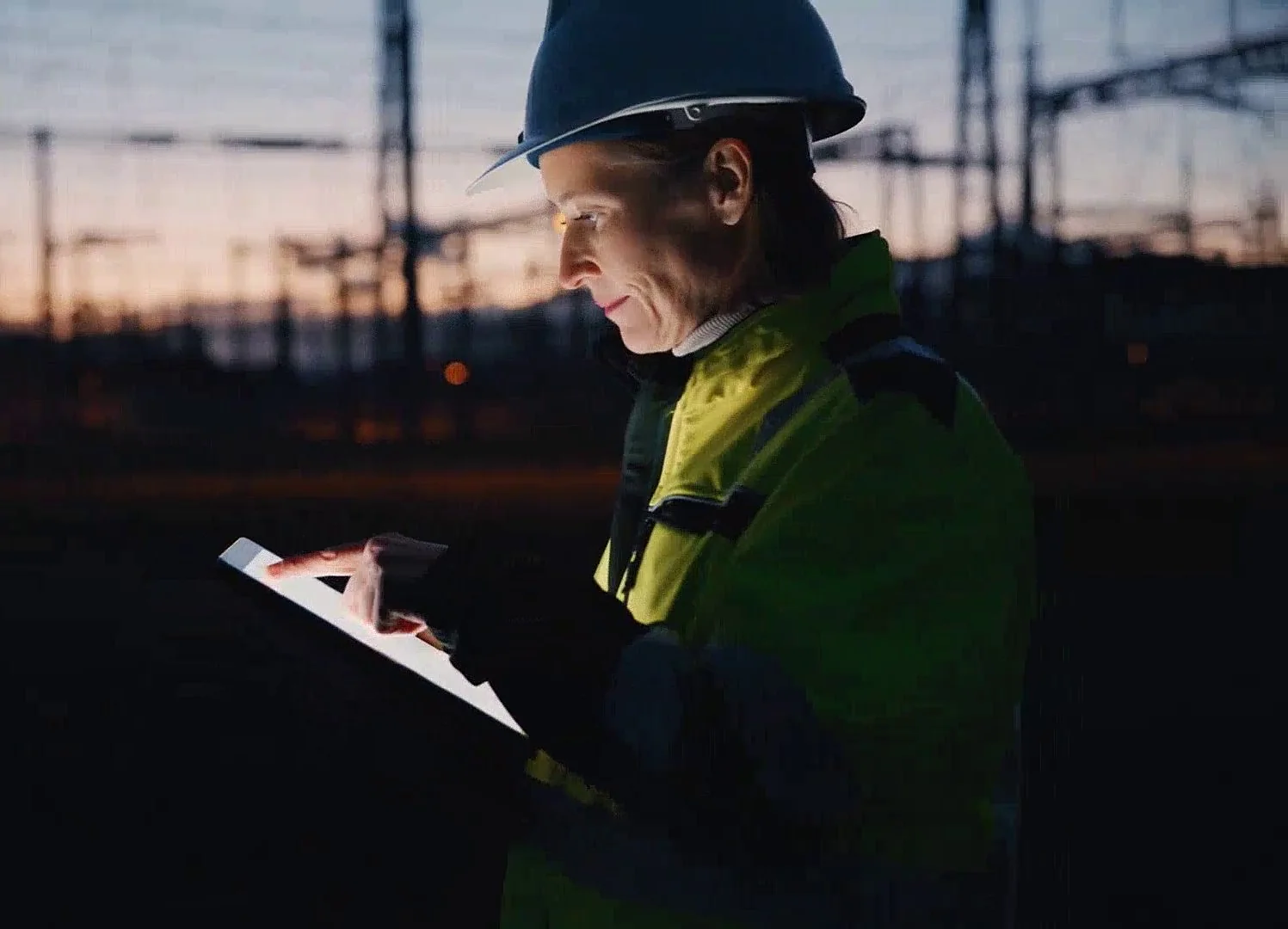
An experienced freelance ATEX inspector for your installations in hazardous areas, checked in advance for certificates and skills.
We know the work from the inside: we have worked on several plants ourselves and know what ATEX certification involves. That is why we look beyond an ATEX inspector's CV, at what someone can really do.
You have one fixed point of contact. Contracts, administration and payment are handled by our back-office partner JEX, in line with the Dutch DBA Act.
NEN-EN-IEC 60079-17
All three inspection grades
The standard for inspection and maintenance of electrical installations in explosive atmospheres has three inspection grades. Our ATEX inspectors carry out all three.
Visual inspection
Finding defects that are visible to the eye, without access equipment or tools.
Close inspection
Also checks with access equipment such as steps and with tools, without opening the enclosure.
Detailed inspection
Also opening the equipment and measuring with test equipment, for defects that only show up that way.
How they help you
- ATEX inspections and assessment of Ex installations
- New-build projects
- Maintenance and inspection programmes
- Inspections during shutdowns and turnarounds
- Reporting findings and drawing up recommendations
Expertise on site
Our inspectors read any type plate with ease
Whether your equipment may safely be used in a zone starts with its type plate. At every inspection our ATEX inspectors check that the marking suits the zone, gas group and temperature class of your installation. This is how to read such a plate.
- 1
CE 0000CE markingThe product meets the European rules. The number belongs to the notified body that monitors production.
- 2
ExEx hexagonThe specific mark for explosion-protected equipment under the ATEX directive 2014/34/EU.
- 3
IIEquipment groupGroup II is for all places above ground, such as the process industry. Group I is for mines.
- 4
2CategoryCategory 2 may be used in zones 1 and 2 (gas) or zones 21 and 22 (dust). Category 1 may also be used in zone 0 or 20, category 3 only in zone 2 or 22.
- 5
GGas or dustG stands for gas, vapour or mist. D stands for dust.
- 6
Ex dbType of protectionHow an explosion is prevented. db is a flameproof enclosure. Other examples: eb (increased safety), ia or ib (intrinsic safety) and p (pressurisation).
- 7
IICGas groupIIA (for example propane), IIB (ethylene) or IIC (hydrogen, acetylene). IIC is the most severe group and may also be used for IIA and IIB.
- 8
T4Temperature classThe highest surface temperature. T4 is at most 135 °C (T1 450, T2 300, T3 200, T5 100, T6 85 °C). The ignition temperature of the gas must be higher.
- 9
GbEquipment protection level (EPL)Ga is for zone 0, Gb for zone 1 and Gc for zone 2. For dust it is Da, Db or Dc.
- 10
XCertificate numbersThe IECEx and ATEX certificate of the product. An X at the end means specific conditions of use apply; they are in the certificate. A U means an Ex component, not complete equipment.
- 11
TaAmbient temperatureThe range in which the equipment may operate. If nothing is marked, −20 °C to +40 °C applies.
- 12
IP66Ingress protectionHow well the enclosure keeps out dust and water. IP66 is dust-tight and resists powerful water jets.
Does the marking not match your zone classification? Our inspector spots it straight away and records it in the report.
Checked in advance
How we check an ATEX inspector
Before a candidate turns up at your site, we know what he can do. You receive his skills table next to the one for your assignment.
A CV doesn't say everything. A skill does.
For every assignment we draw up a skills table: a list of the skills needed to do the work well. That way you choose on what someone can do, not on what is in a CV.
What we check in advance
- Certificates: VCA-Vol, NEN 3140 VP and CompEx 1 to 4 or IECEx Ex 001/004/007/008
- Skills table with 20 skills of an ATEX inspector, filled in by the candidate and discussed with him
- At Expert level: the years of experience and where and what he did
- Experience with ATEX inspections in industrial settings, by default 3 years or more, unless you ask otherwise
We don't push CVs
How we work
- 1Your requestYou tell us in three short steps who you are looking for, when and for how long.
- 2We get in touchWe call or email you to discuss the request, so we know exactly which skills the assignment needs.
- 3We search for youWe look in our database and network for carefully selected freelancers who fit your project.
- 4Your proposalYou receive a proposal with the candidate's WF profile and skills table, next to the skills table of your assignment.
Frequently asked questions
Hiring an ATEX inspector
What does an ATEX inspector cost?
The rate depends on the assignment, the experience and the duration. We discuss it with you for each request.
How soon can an ATEX inspector start?
A freelancer's onboarding can be completed within two days, provided we have all the right information.
Which certificates does the inspector have?
For ATEX work we require: VCA-Vol, NEN 3140 VP and CompEx 1 to 4 or IECEx Ex 001/004/007/008. For each assignment we record what is needed.
Is hiring a freelancer compliant with the DBA Act?
We work in line with the Dutch DBA Act. Our back-office partner JEX handles contracts, administration and payment under all legal rules.
Can the inspector also do minor repairs?
That differs per inspector. The skills table shows whether the candidate can do this and at what level.
Where are your ATEX inspectors active?
Throughout the Netherlands and Belgium, in petrochemicals, oil & gas, energy and process industry.
Do you need an ATEX inspector?
Let us know. After your request we will contact you to discuss it.